What Is Peptide Purity And Why Does It Matter In Research-grade Peptides? Qing Li Peptide For research entailing any kind Third-Party Testing of biological system (cell society, in vivo pet designs), endotoxin information is very appropriate and its lack needs to be dealt with as an insufficient COA. Third-party screening labs of note in the peptide research supply chain consist of recognized logical chemistry services that operate under ISO or comparable top quality administration structures. A COA identifying the testing research laboratory by name, and for which the testing lab's accreditation can be individually validated, carries considerably extra evidentiary weight than an anonymous internal COA. Most peptide suppliers and research study labs rely on a number of well-established analytical methods. High pureness is preferable since also small contaminants might disrupt experimental results or analyses. After successful screening, each production batch is provided a Certificate of Analysis (COA). This paper is made openly available and connected directly to the equivalent item web page for complete transparency. We only collaborate with certified factories that follow GMP standards to remove flaws first. We perform formula stability examinations to make certain that the item does not degrade throughout transportation and preserves its residential properties throughout its life span, no matter outside problems. Custom-made peptides from research through analysis and therapeutic operations with documentation support.
- The lab highlights reliable example handling and accuracy in peptide evaluation.At Maxed Out Substances, we make peptide openness a leading priority.Chiral approaches can deal with enantiomeric pureness where stereochemistry is a problem.If needed, we will certainly offer you with an effective one-stop services.This degree of detailed evaluation guarantees the peptide's precision-- suggesting the series and purity are exactly as classified-- which is essential for speculative reproducibility.
Additional Screening Available For Research Study Peptides?
HPLC is one of one of the most typically utilized methods in peptide purity screening. If you see numerous large peaks of comparable height, you're looking at either a low-purity example or a mix. If the primary height has a noticeable "shoulder"-- a bump on one side-- that typically indicates a closely associated impurity (like a deletion peptide) that the column couldn't totally solve. The peptide is travelled through an easy filtration action (commonly gel purification or a quick reversed-phase cleaning) to eliminate salts, small-molecule by-products, and scavengers from the cleavage step. Constant shot quantity matters because straining the column can widen heights, misshape pureness estimates, or hide neighboring impurities. For scientists devoted to quality-verified peptide study, SeekPeptides provides thorough advice on methods, dosing, and vendor examination. The combination of evidence-based instructional sources and functional devices aids scientists make educated choices throughout their peptide trip, from preliminary vendor selection via procedure optimization. Recognizing how long peptides require to work aids establish reasonable assumptions, yet validated item high quality guarantees the timeline analysis is valid. Some suppliers supplying top quality products encourage third-party testing and may compensate testing expenses if outcomes confirm their insurance claims. This self-confidence indication suggests the supplier counts on their product quality. It separates the target peptide from peptide-related pollutants (removal series, abbreviated fragments, and synthesis by-products). Retention time is the elapsed time from shot to the minute a compound's peak maximum is identified. It is particular of a compound under details chromatographic problems (same column, exact same gradient, same temperature level). Regular retention time across sets offers confidence that the exact same substance is being delivered. If a vendor's lot-to-lot COAs show meaningfully various retention times for the very same substance, this recommends either an adjustment in compound or an adjustment in chromatographic problems-- both of which deserve analysis. By clicking "Yes", you validate that you are 21 years old or older, agree that any products purchased will certainly be used strictly for research functions and approve our Terms of Service. Some third event labs offer the outcomes of the assay as a binary pass/fail. It is as a result important to evaluate for heavy steels; appropriately, Straightforward Peptide tests for every single solitary product for hefty steels. Heavy steels are unseen to HPLC and mass specification and, if existing, will build up in organic matter deal time with unfavorable effects on neurological, renal and hepatic feature.What maker is made use of to test peptide purity?
Peptide pureness is regularly figured out by HPLC (high efficiency fluid chromatography). This technique allows separation and relative metrology of each peptide synthesized. If coupled to a mass spectrometer (MS), this gives molecular mass/ identity information of the target peptide and accompanying contaminations.
The Demand For Enhanced Understanding Of Analytical Ultracentrifugation Curve Fitting
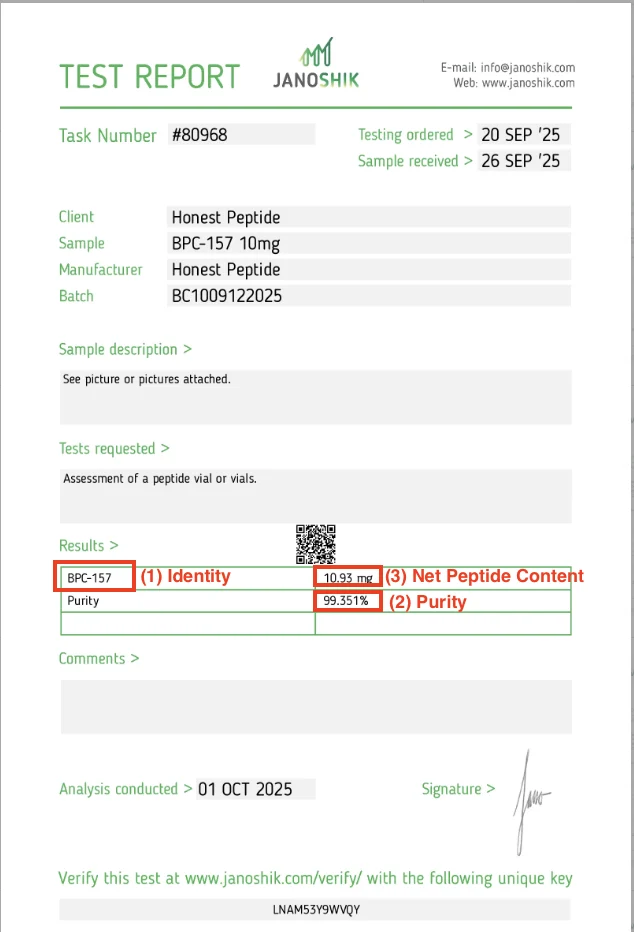
This relative information gives context beyond private examination results. Net peptide web content steps peptide versus everything else, including water, salts, and counter-ions. A peptide can be 99% pure yet have just 70-80% internet peptide web content. Acceptance limitations for study usage depend upon the application-- cell-based assays require stricter endotoxin limitations than, for example, binding assays utilizing cleansed healthy Identity Testing proteins. HPLC can disclose brand-new contamination peaks, boosted shoulder heights, or a minimized main-peak location after storage space or dealing with stress. It is one factor appropriate peptide storage and reconstitution methods issue. Mass spectrometry validates whether the gauged mass matches the anticipated peptide mass.